
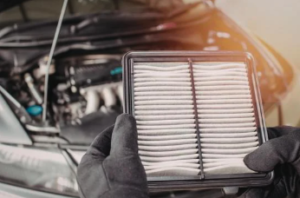
When to Replace Your Engine Air Filter
Your engine needs a steady supply of clean air to run efficiently, and the engine air filter is what keeps dust, dirt, and road debris out of it. Here’s the part that surprises a lot of drivers: many people replace this filter far more often than they actually need to. Below is what the experts at AAA recommend on when to change it, how to tell if yours is dirty, and why it matters—written for drivers in Charles City and across Floyd County.
What Your Engine Air Filter Does
The engine air filter sits between the outside air and your engine’s intake. Its job is to trap:
- Dust, dirt, and sand from the road
- Pollen and other airborne debris
- Abrasive particles that would otherwise wear down internal engine parts
A clean filter helps your engine “breathe” properly so it can mix air and fuel for efficient combustion.
How Often Should You Replace It?
According to AAA, most automakers recommend inspecting the engine air filter regularly but replacing it only as needed or at extended mileage intervals—commonly somewhere around every 30,000 to 45,000 miles, depending on driving conditions. In relatively clean city or suburban driving, a filter may be good for 20,000 miles or more. Dusty rural roads and gravel—common around Floyd County—can mean you’ll need a new one sooner. Replacing it more often than necessary, AAA notes, simply wastes money without any real benefit.
How to Tell If Your Filter Is Dirty
Visible surface dirt isn’t a reliable sign—filters actually trap contaminants better once they’ve picked up a light coating of dust. AAA suggests a simple light test for pleated paper filters: remove the filter from its housing and hold it up to a bright light such as a 100-watt bulb. If light passes easily through more than half of it, it can go back in.
A couple of exceptions: some vehicles use extended-life filters made of dense fabric that won’t let light through—replace those at the manufacturer’s recommended interval unless they’re visibly caked with dirt. And some trucks have a service indicator on the filter housing; check it at each oil change.
Signs It May Be Time for a New One
- Rough idling, hesitation, or stalling more often than usual
- Noticeably reduced performance, especially at higher speeds
- In older vehicles or severe conditions, reduced fuel economy and higher emissions
A note on fuel economy: A U.S. Department of Energy study cited by AAA found that on modern fuel-injected engines, air filter condition has no significant impact on fuel economy—though a badly restricted filter will reduce the engine’s maximum power. In older cars or under severe driving conditions, a dirty filter can still cut into your gas mileage.
Get It Checked at Apex Performance Lube
Not sure when your engine air filter was last changed? Stop by Apex Performance Lube – Valvoline Express Care in Charles City. We’ll inspect it during a routine visit—no appointment needed—and replace it only if it actually needs it, so you don’t pay for parts you don’t need.
Frequently Asked Questions
1) How often should I change my engine air filter?
Inspect it regularly and replace it as needed—often somewhere around every 30,000 to 45,000 miles, and sooner if you frequently drive on dusty or gravel roads.
2) Will a dirty air filter hurt my gas mileage?
On modern fuel-injected engines the effect is minimal, but a badly clogged filter reduces power and can lower fuel economy in older vehicles or severe conditions.
3) Where can I get my engine air filter checked in Charles City or Floyd County?
You can stop by Apex Performance Lube, Valvoline Express Care in Charles City—serving drivers across Floyd County—for a quick inspection and replacement if needed.
Source: Adapted from AAA Automotive, “Changing Your Car’s Engine Air Filter” (aaa.com). Apex Performance Lube is not affiliated with or endorsed by AAA.